
Recognising the signs of food intolerance in dogs UK: A practical guide
Most dog owners think a rash or a tummy rumble is just a phase.
In reality, those signs can point to food intolerance, and they show up more often than you realise across the UK.
First, watch your dog after meals. If they scratch, shake, or have loose stools within a few hours, note the time and the food they ate.
Second, keep a simple diary. Write down what they eat, any symptoms, and the day of the week. A pattern will emerge after a week or two.
Third, rule out other causes. A vet can check for parasites or infections, but if those are clear, food may be the culprit.
One practical step is to try an elimination diet. Switch to a single‑protein, grain‑free food for 10‑14 days and watch the changes.
If the symptoms fade, re‑introduce old foods one at a time. The one that triggers a reaction is likely the trigger.
For a quick reference on what to look for, see 12 Common Dog Food Intolerance Symptoms – a handy checklist for UK owners.
When you’ve spotted the pattern, an at‑home test can give clear results without a vet visit. It’s simple: collect a small sample, send it off, and get a detailed report online.
Beyond the test, consider broader health habits. Staying active, reducing stress, and keeping a balanced diet help the gut heal.
For more ideas on staying proactive about health, check out XLR8well, a partner that offers resources on overall wellness.
Common digestive signs of food intolerance
If your dog’s tummy is acting up, it could be a sign of food intolerance. You might see a rumble after a meal, or a sudden dash to the garden for a quick poop.
Typical digestive clues include frequent gas, a bloated belly, soft or watery stools, and occasional vomiting. Some pups develop a noticeable increase in wind after eating, while others may have a mild cramp that makes them restless.
Watch the timing. If the upset shows up within a few hours of a new snack or a change in kibble, note the exact food and the hour. A pattern that repeats over several days is a strong hint.
Here’s a quick video that walks you through what to look for:
Once you’ve spotted the signs, a simple diary can help you connect the dots. Write down each meal, any gut upset, and the time of day. After a week you’ll see if certain proteins or grains keep showing up.
For broader wellness tips, you might explore XLR8well, which offers advice on keeping your dog’s gut happy.
If you’re curious about natural supplements that support digestion, Exuvital lists a few UK‑friendly options.
Need a quick way to get answers from experts? AskEsiS lets you ask pet‑health questions and get clear guidance.
Bottom line: keep an eye on gas, stool changes, and timing. Pair that with a food diary and, if needed, an at‑home intolerance test. That simple routine can save you weeks of guessing.
Skin and coat symptoms to watch for
When a food intolerance shows up on the outside, the skin often screams first.
Itching that appears a few hours after a meal is a classic clue. If your dog paws at the belly, ears or paws repeatedly, note the timing.
Red patches or hot‑spot‑like lesions that flare up after a new treat are another red flag. They feel warm to the touch.
Dry, flaky skin that looks like a dusted blanket often means the gut isn’t absorbing nutrients properly. You may see dandruff on the coat or on the floor after a brush.
Patchy hair loss or thinning around the neck, tail base or behind the ears can be a silent sign. The hair may come out in fine tufts rather than clumps.
The key is to link the skin flare with what was eaten. If the same snack shows up before the itch each week, you’ve likely found a trigger.
A quick skin‑check routine helps:
• Look for new or worsening itch after meals.
• Scan for red, hot or raw‑looking spots.
• Feel for dry, scaly patches.
• Check for thin or missing hair.
If you see any of these signs, an at‑home food intolerance test can give you clear results without a vet visit. UK Pet Food Intolerance provides a simple kit that lets you mail a tiny stool sample to an accredited lab and receive guidance online.
How to observe and record your dog’s reactions
Watch your dog closely right after each meal. A quick glance can tell you if something’s off.
First, note the time the food was given. Then watch for any change, like a sudden scratch, a head shake, a limp, or a run to the garden. Jot it down right away.
Next, check the skin. Is there a red spot on the belly, ears, or paws? Does the coat look dry or flaky? Feel the area, warm spots often mean irritation.
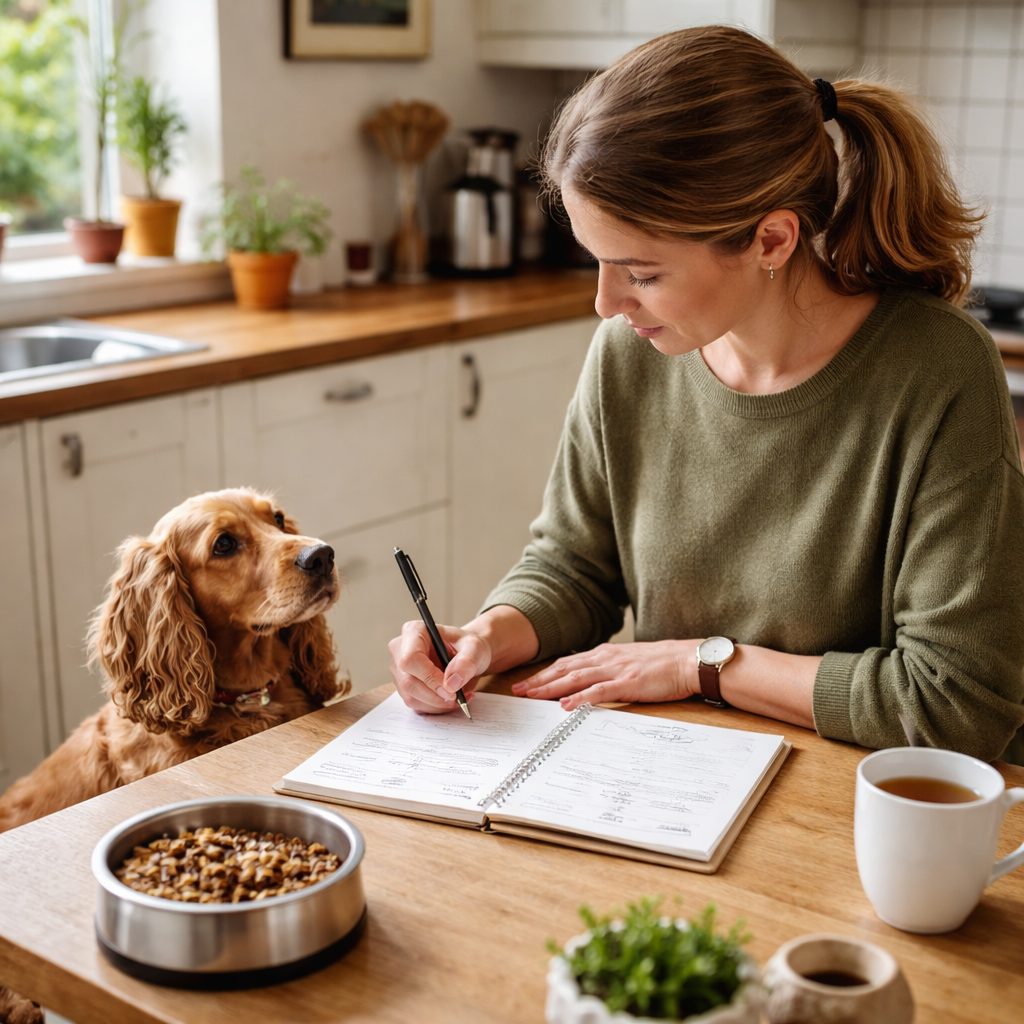
Write everything in a simple diary. Use a table with columns for date, meal, ingredients, symptoms, and severity. The food journal template offers a ready-made format you can copy.
Be consistent. Write an entry after every snack, not just main meals. Even a tiny treat can cause a later reaction.
Look for patterns over a week or two. If the same food shows up before the itch each time, you’ve likely found a trigger.
When you spot a pattern, you can try an at-home test. UK Pet Food Intolerance makes the kit easy to use: just send a small stool sample and get clear guidance online.
Tip: Take a quick photo of any skin spot and note the colour. A visual record helps you compare changes day by day.
If you’re unsure what ingredient to list, check the bag or ask the maker for a full list. Knowing the protein or grain can save weeks of guessing.
Step‑by‑step diet elimination trial
First, pick a single‑protein, grain‑free kibble that your dog has never eaten. It could be a novel source like duck or venison. Give only this food for the next 10‑14 days. No treats, no table scraps, no supplements.
Why the strict limit? Even a tiny bite of the old diet can hide a trigger and spoil the trial.
Next, keep a simple log. Write the date, the amount fed, and any sign you notice – itch, loose stool, vomit, or a change in energy. One line a day is enough.
Check the log at the end of each week. If the symptoms fade, you’re on the right track. If they stay, you may need a longer trial or a different novel protein.
So, what if the rash comes back? Re‑introduce the old food one ingredient at a time, waiting three days between each. Note the reaction. The food that causes a flare is likely the culprit.
When you’ve isolated the problem, you can confirm it with an at‑home test. UK Pet Food Intolerance offers a kit that lets you send a small stool sample to an accredited lab for clear results.
Need a reference for the trial length? The veterinary guide from Nextmune outlines a 10‑14 day period as standard practice.Canine food trial guide
| Step | What to do | Why |
|---|---|---|
| 1 | Choose novel protein food only | Eliminate hidden allergens |
| 2 | Record daily signs | Spot patterns quickly |
| 3 | Re‑introduce old foods one by one | Identify specific trigger |
When to seek veterinary advice and what tests are available
If your dog’s itch, tummy upset or skin flare keeps coming back, it’s time to call the vet.
A vet can rule out parasites, infections or hormonal problems that look like food intolerance.
If the symptoms appear just after a meal, note the exact time and what was fed. Bring that note to the vet – it helps narrow down the suspect ingredient and speeds up testing.
Watch for these warning signs:
- Repeated vomiting or diarrhoea that lasts more than a couple of days
- Persistent itching that worsens after meals
- Weight loss or a dull coat despite a good appetite
- Any sudden change in behaviour or energy levels
When you see one or more of these, book an appointment. The vet may suggest a blood panel to check for allergic antibodies, a skin scrape to look for mites, or a faecal exam to spot parasites.
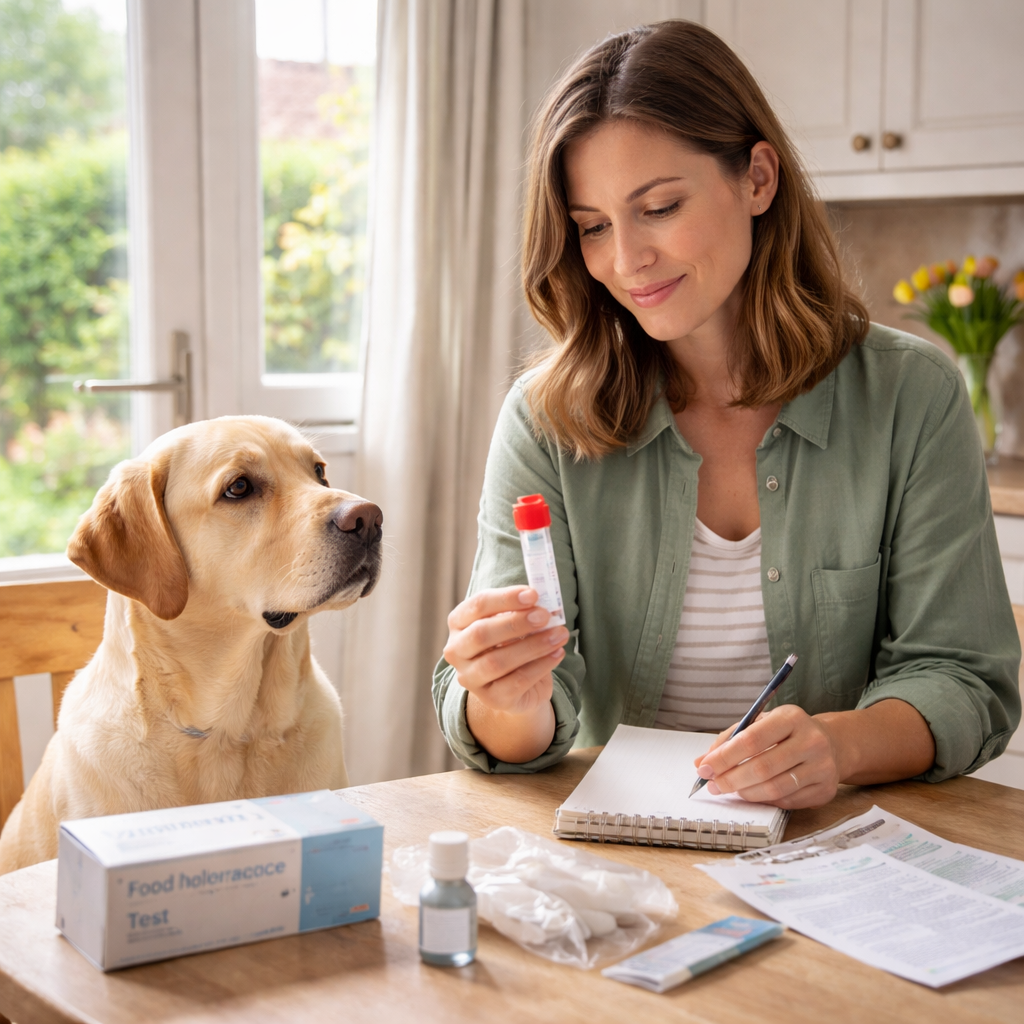
Beyond clinic tests, an at-home food intolerance kit can give you extra insight without another visit. UK Pet Food Intolerance provides a simple kit: you collect a tiny stool sample, mail it to an accredited lab, and receive a clear report online.
After the lab returns the result, discuss it with your vet. They can advise a tailored diet plan, recommend hypo-allergenic commercial foods, or suggest homemade meals that avoid the identified triggers.
In short, don’t wait for the rash to spread. Early vet input combined with a reliable at-home test can fast-track a solution and get your dog back to feeling great.
Conclusion
Spotting the signs of food intolerance in dogs uk can feel like solving a puzzle, but the pieces are simple.
When you notice itch, gas, loose stools, or a dull coat right after a meal, write it down. A short diary often reveals the pattern faster than guesswork.
So, what should you do next?
Talk to your vet early. If the vet rules out parasites or infection, an at‑home test can confirm which ingredient is the culprit without another clinic visit.
Once you know the trigger, switch to a novel protein diet for two weeks and watch the symptoms fade. Keep the log; it helps you stay on track and avoid accidental re‑exposure.
Remember, you don’t have to live with mystery discomfort. A clear test result and a focused diet change can get your dog back to wagging happily.
FAQ
What are the common signs of food intolerance in dogs in the UK?
The most common signs show up in the skin and the gut. You might see your dog scratch a lot, lick paws, or have red spots after a meal. You may also notice gas, a bloated belly, loose stools or occasional vomiting. A dull coat or hair loss can pop up too. Write down what you see right away so the pattern is clear.
How soon after a meal can symptoms appear?
Symptoms can start fast or take a few hours. Some dogs itch or gag within minutes of eating, while gut signs like loose stool often appear after one to three hours. In rare cases a reaction shows up the next day. Note the exact time you fed and when the sign showed – that helps you link food to the problem.
Should I try an elimination diet before testing?
An elimination diet is a practical first step. Pick a single protein that your dog has never eaten – duck or venison work well. Feed only that food for ten to fourteen days, no treats, no table scraps. Keep a short diary of any itch, stool change or energy dip. If signs fade, you’re on the right track.
Can an at‑home food intolerance test replace a vet visit?
At‑home food intolerance kits give you clear lab results, but they don’t replace a vet’s exam. Use the kit to pinpoint which ingredient is likely causing the issue. Then show the report to your vet – they can confirm the link and advise a safe diet plan. It’s a helpful tool, not a medical diagnosis.
What if my dog shows skin and gut signs together?
When skin itch and gut upset happen together, it often means the gut isn’t absorbing nutrients well. Your dog may scratch more, and the coat can look dry or thin. Keep a log of both signs and the foods you give. An at‑home test can tell which protein is the trigger, then a vet can help you plan a balanced diet.
How often should I record my dog’s reactions?
Recording every meal helps you catch patterns fast. Write the date, the food type, any treat, and the symptom you saw – itch, gas, loose stool, or a rash. A simple table on paper or phone works. Do this for at least two weeks; the more data you have, the easier it is to spot the culprit.