

Hypoallergenic Dog Food UK: A Practical Guide for Concerned Pet Owners
Ever caught yourself watching your Labrador stare at his bowl, then suddenly dash to the garden with a rumbling belly? You know that moment when you’re not sure if it’s a simple tummy upset or something deeper.
Most dog owners who grapple with chronic gas, loose stools or relentless itching eventually hit a wall – the usual “switch to a grain‑free brand” trick just isn’t cutting it. The frustration builds, you start Googling “hypoallergenic dog food uk” at 2 am, and the sea of product pages feels endless.
What we’ve learned at UK Pet Food Intolerance is that the missing piece is often a hidden food sensitivity. Without pinpointing the culprit, you’re essentially guessing, and guesswork rarely leads to lasting relief.
Here’s a quick three‑step roadmap you can try right now:
- Step 1 – Observe. Keep a simple log for a week: note every meal, treat, and any symptom flare‑up (itchy paws, vomiting, excessive gas).
- Step 2 – Simplify. Switch to a single, novel protein source (think venison or duck) and a carbohydrate that your dog hasn’t eaten before, like sweet potato. Stick to this for at least ten days.
- Step 3 – Test. If symptoms persist, consider an at‑home intolerance test – it’s painless, you just send a hair sample and get a clear report online.
Take Bella, a 4‑year‑old border collie from Manchester. Her owner tried three different “grain‑free” recipes, yet Bella kept scratching her ears. After a two‑week trial on a single‑ingredient diet and a quick home test, it turned out she was reacting to peas, a hidden filler in many boutique foods. Switching to a pea‑free, hypoallergenic formula instantly calmed her skin.
Another example: Max, a golden retriever in Leeds, suffered from daily loose stools. His family logged meals and discovered a pattern with dairy‑based treats. Once they removed all dairy and moved to a specialised hypoallergenic brand, his stools normalised within a week.
For a deeper dive into specific brands that avoid common allergens like wheat, corn, soy and dairy, check out Practical Choices to Calm Your Dog’s Digestive Upset. It breaks down the top options you can find in UK pet stores and online.
So, if you’re tired of the endless cycle of trial‑and‑error, start with observation, simplify the diet, and use a reliable test to guide your next food choice. A calm stomach and itch‑free coat are well within reach – you just need the right information and a bit of patience.
TL;DR
If you’re fed up with endless trial‑and‑error diets, our quick three‑step roadmap—observe symptoms, simplify to a novel protein, and use an at‑home test—pinpoints the culprit and guides you to the right hypoallergenic dog food uk for lasting relief. That way you’ll see calmer tummies, fewer itchy paws, and a happier companion without the guesswork.
Understanding Dog Food Allergies
Ever watched your border collie pause at the bowl, then sprint off with a rumbling belly? That uneasy feeling – is it just a stray hair or the start of a food allergy? Understanding what’s really happening under that fur can save you weeks of guesswork.
Food allergies in dogs aren’t the same as the classic peanut‑butter reaction you see on TV. They’re often triggered by proteins that your pup has never seen before – think duck, venison or even novel fish varieties. When the immune system flags that protein as a threat, you get the classic trio: itchy skin, upset stomach and relentless gas.
The tricky part is that many of the “hypoallergenic” dog foods marketed in the UK still hide common culprits like peas, soy or dairy in the fine print. A single ingredient list doesn’t guarantee safety – manufacturers can use hydrolysed protein or hidden fillers that still provoke a reaction.
So how do you separate the wheat from the chaff? First, watch the symptoms. Itchy paws after a new treat? Loose stools after a grain‑free kibble? Keep a simple log for at least a week – note the food, the treat and any flare‑up. Patterns emerge faster than you think.
Next, simplify the diet. Swap to a novel protein and a single carbohydrate source – duck and sweet potato work well for most British breeds. Stick to that formula for ten to fourteen days. If the itching subsides and the tummy calms, you’ve likely pinpointed the offender.
But what if the symptoms linger? That’s where an at‑home intolerance test shines. By analysing a tiny hair sample, the lab can flag specific proteins your dog reacts to, without a vet visit. It’s painless, quick and gives you a clear roadmap for choosing truly hypoallergenic dog food uk.
A quick tip: avoid treats that list “protein blend” or “meat meal” – those are red flags for hidden allergens. Stick to foods where the first ingredient is a single, recognizable protein. And always double‑check the labelling for dairy, wheat or corn derivatives.
If you’re still stuck, a good resource is XLR8 Well – they cover holistic pet nutrition and often highlight emerging protein sources that are low‑allergen. Their guides can help you broaden your options without falling back on the usual suspects.
The video below walks through a typical home test kit – from collecting the sample to interpreting the results. Watching it can demystify the process and show you exactly what to expect.
When the results come back, they’ll list proteins like chicken, beef or soy that triggered an immune response. Armed with that list, you can confidently shop for hypoallergenic dog food uk that truly avoids those triggers. Many UK retailers now stock single‑source formulas, so you won’t have to hunt far.
A final checklist for dog owners:
- Keep a symptom diary.
- Switch to a novel protein for at least 10 days.
- Use an at‑home test to confirm triggers.
- Choose foods with single‑ingredient protein labels.
- Re‑introduce foods slowly to verify tolerance.

By taking these steps, you turn a frustrating mystery into a manageable plan. Your dog gets back to carefree walks, happy tail wags, and a calm belly – and you finally stop second‑guessing every new bag of kibble.
Key Ingredients in Hypoallergenic Dog Food
When you finally land on a hypoallergenic dog food uk label, the first thing you’ll notice is how short the ingredient list is. That brevity isn’t a marketing gimmick – it’s the backbone of a diet that won’t set off your dog’s immune system.
So, what actually makes an ingredient “hypoallergenic”? In simple terms, it’s an ingredient that fewer than 2 % of dogs react to. The science is pretty straightforward: fewer foreign proteins mean fewer chances for the body to mistake food for a threat.
Novel protein sources
Most of the time the biggest trigger is the protein. Switching from the usual chicken or beef to something your dog has never seen before can be a game‑changer. Think single‑source proteins like duck, venison, salmon or rabbit – they’re low‑risk and packed with the amino acids your pup needs.
If you want to go even further off the beaten path, insect protein is gaining traction. Less than 2 % of dogs show a sensitivity to insect‑derived meals, making it a solid hypoallergenic option. You can read more about why insect protein works so well here.
Hydrolysed proteins
Hydrolysis is a fancy word for “break the protein down into tiny fragments”. When the molecules are small enough, the immune system can’t recognise them as an allergen, so the reaction fizzles out. Many premium hypoallergenic brands offer hydrolysed chicken or beef – the original protein is there, just invisible to the dog’s immune radar.
This approach works especially well for dogs with severe sensitivities, but it can be pricier. Still, the peace of mind of knowing the protein can’t trigger itching or gut upset is often worth the extra spend.
Limited‑ingredient carbohydrates
Carbs are the silent side‑kick that can either soothe or sabotage a sensitive gut. Look for single, easily digestible sources like sweet potato, pumpkin or rice. Avoid anything that sneaks in hidden legumes or grains, because those can carry trace amounts of protein that might still provoke a flare‑up.
One handy rule of thumb: if the carb list reads “sweet potato, pea starch, beet pulp”, you’re probably in safe territory. If you see “wheat, barley, soy”, steer clear – those are classic allergens.
Additives to avoid
Even the purest protein can be ruined by a handful of unnecessary extras. Common culprits include:
- Artificial colours and flavours – they do nothing for nutrition and can irritate the skin.
- Preservatives like BHA, BHT or ethoxyquin – many dogs react poorly.
- Meat‑and‑animal‑by‑products – unless they’re hydrolysed, they often hide chicken, beef or lamb.
When you scan the label, aim for “no artificial additives” and “no meat by‑products” unless the product explicitly says the proteins are hydrolysed.
Putting it together
Here’s a quick checklist you can use the next time you’re scrolling through a hypoallergenic dog food uk page:
- Single, novel animal protein (duck, venison, salmon, rabbit or insect).
- Either hydrolysed protein or a truly novel source.
- One carbohydrate – sweet potato, pumpkin or rice.
- No common allergens: chicken, beef, lamb, dairy, wheat, barley, soy, corn.
- No artificial colours, flavours or preservatives.
If you’re not sure whether a brand ticks all the boxes, a quick glance at a specialist retailer can help. For example, Lakes Collection’s range of novel‑protein dog food lays out exactly which proteins are used and why they’re low‑allergy here. Pairing that knowledge with an at‑home intolerance test from UK Pet Food Intolerance gives you a clear picture of what your dog can tolerate and what to keep out of the bowl.
Bottom line: the right ingredients turn a guess‑work diet into a targeted, relief‑focused plan. By focusing on novel or hydrolysed proteins, simple carbs, and a clean additive profile, you give your dog the best chance to thrive without the itch, gas or upset tummy that’s been driving you round the bend.
How to Choose the Right Hypoallergenic Dog Food for Your Dog
Ever stared at a bag of kibble and thought, “Is this the one that will finally stop the itching?” You’re not alone – we’ve all been there, scrolling through endless pages of “hypoallergenic dog food uk” hoping for a miracle.
What you really need is a simple decision‑making framework, not a crystal ball. Below is a step‑by‑step guide that turns the overwhelm into a clear plan you can act on today.
Step 1: Pinpoint your dog’s specific triggers
Start with the symptom log you’ve been keeping. Does the itch flare after a treat? Does gas spike after a particular carb? Write the top two culprits down.
If you’re still unsure, an at‑home intolerance test from UK Pet Food Intolerance can give you a shortlist of proteins to avoid – it’s fast, painless, and the results come straight to your inbox.
Step 2: Match the trigger to a protein type
There are two proven routes: hydrolysed protein or a truly novel source. Hydrolysed diets break the protein into fragments so tiny that the immune system can’t recognise them as an allergen. Novel proteins are ingredients your dog has never seen before – think duck, venison, rabbit, salmon or even insect meal.
For a quick comparison of the pros and cons, check out this guide to the best hypoallergenic dog food in the UK. It lists brands that specialise in both hydrolysed and novel formulas, so you can spot the right category at a glance.
Step 3: Scan the carbohydrate list
Carbs should be a single, easily digestible source. Sweet potato, pumpkin or rice are the safest bets. Avoid anything that hints at hidden legumes – “pea starch” or “lentil flour” can re‑introduce the very proteins you’re trying to eliminate.
Step 4: Vet the additive profile
Colourings, artificial flavours and preservatives (BHA, BHT, ethoxyquin) are unnecessary and can irritate sensitive skin. Look for statements like “no artificial additives” or “preservative‑free”.
A quick visual scan of the label can save you hours of trial‑and‑error later.
Step 5: Consider the whole‑diet guarantee
Some brands, especially veterinary‑grade lines, offer a “complete and balanced” claim. That means you won’t need to supplement with extra vitamins or minerals, which could unintentionally re‑introduce allergens.
The Veterinary HPM® hypoallergy diet is a good example – it’s hydrolysed, uses potato starch as the sole carb, and is formulated to meet all nutritional requirements.
Step 6: Test and observe
Buy a small bag of your chosen formula and feed it exclusively for 8‑12 weeks. No treats, no supplements, no table scraps – just the food and fresh water.
Keep the symptom log running. If the itch, gas or loose stools disappear, you’ve likely found a winner. If not, return to Step 1, pick a different novel protein, and repeat.
Quick checklist before you hit “add to basket”
- Single, novel protein or hydrolysed protein.
- One simple carbohydrate – sweet potato, pumpkin or rice.
- No common allergens (chicken, beef, lamb, dairy, wheat, barley, soy, corn).
- No artificial colours, flavours or preservatives.
- Complete‑and‑balanced claim from a reputable manufacturer.
Remember, the goal isn’t just to buy a bag of food; it’s to give your dog a diet that lets the skin calm down, the tummy settle, and the tail wag without hesitation. With this roadmap, you’ll move from guesswork to confidence, and your furry friend will thank you with fewer scratches and a happier belly.
Top 5 Hypoallergenic Dog Food Brands Available in the UK
Alright, you’ve logged the symptoms, you’ve done the elimination trial, and now you’re standing in the pet aisle wondering which bag will finally calm that itchy, gassy mess. Let’s cut through the noise and spotlight the five brands that consistently earn a nod from owners dealing with food sensitivities.
1. Forthglade Hydrolysed Range
Forthglade’s veterinary‑grade hydrolysed line breaks proteins down to tiny fragments, so even the most reactive immune system can’t recognise them as a threat. The formula uses potato starch as the sole carb, keeping the ingredient list ultra‑simple. We’ve seen owners report fewer flare‑ups after just a couple of weeks – a solid option if you need a truly “no‑allergen” guarantee.
2. Edgard & Cooper – Hypoallergenic Starter Bundle
Edgard & Cooper takes a different tack: a novel‑protein, grain‑free recipe that swaps chicken for venison or duck, paired with sweet potato. The brand’s transparency (full ingredient percentages on the pack) makes it easy to verify there’s nothing sneaky hiding in the mix. It’s also a favourite among eco‑conscious families because the sourcing is UK‑focused and the packaging is recyclable.
3. Pure Pet Food – Air‑Dried Limited Ingredient
Pure Pet Food’s air‑dried kibble is essentially a freeze‑dried meal that retains nutrients while staying shelf‑stable. Their limited‑ingredient line sticks to a single animal protein (usually salmon) and one carb source, which is perfect for dogs that react to both meat and grain. The texture is a bit crunchier, which many picky eaters actually love.
4. Grub Club – Insect‑Protein Formula
Insect protein is still a novelty for most owners, but it’s gaining traction because fewer than 2 % of dogs show a reaction to it. Grub Club’s cricket‑based kibble delivers high‑quality protein with a low allergen profile, plus it’s a greener choice for the planet‑savvy pup parent. The taste is surprisingly palatable – think of it as a “meat‑free” day that still feels meaty.
5. Lily’s Kitchen – Limited‑Ingredient Wet Food
Lily’s Kitchen offers a wet line that strips everything down to a single protein (often wild‑caught salmon) and a single carb (sweet potato). The moisture content can be a gut‑soother for dogs that struggle with dry kibble digestion, and the short ingredient list makes it easy to spot any hidden triggers.
So, how do you decide which one fits your dog’s unique needs? Here’s a quick cheat‑sheet to compare the basics.
| Brand | Protein Approach | Key Allergen‑Free Feature |
|---|---|---|
| Forthglade | Hydrolysed chicken/beef | Protein broken down to invisible fragments |
| Edgard & Cooper | Novel venison/duck | Single novel protein + sweet potato carb |
| Pure Pet Food | Limited‑ingredient salmon | Air‑dried, retains nutrients, no grains |
| Grub Club | Insect cricket meal | Low‑allergen insect protein, sustainable |
| Lily’s Kitchen | Wet wild salmon | Single protein + single carb, high moisture |
Remember, the best choice often comes down to trial – but you don’t have to guess. If you’ve already pinpointed a sensitivity with a UK Pet Food Intolerance at‑home test, you can match the result to the protein type above and head straight for the brand that aligns.
Want a deeper dive into how these brands stack up against each other? Check out Smart Bark’s 2026 UK dog food roundup for detailed ingredient analysis, and for a focused look at hypoallergenic options see Pooch & Mutt’s hypoallergenic food review. Whatever you pick, keep the bag size small at first – a test run of a fortnight will tell you if it’s a win or a waste of cash.
Bottom line: you don’t need to swing between every brand on the shelf. Focus on the protein strategy that matches your dog’s test results, check the carb is a single, easy‑to‑digest source, and you’ll be well on your way to a calmer coat and quieter tummy.
Transitioning Your Dog to New Food Safely
So you’ve finally picked a hypoallergenic dog food uk that looks promising – maybe a novel‑protein duck recipe or a hydrolysed blend. The excitement is real, but the real test begins when you start the bowl.
Ever watched a puppy sniff a new bowl and then back away like it’s a mystery meat? That hesitation is normal. Our guts – human and canine – need time to adjust to new proteins, fats and fibre. Jumping straight in can trigger the exact symptoms you’re trying to avoid: gas, loose stools or itchy skin.
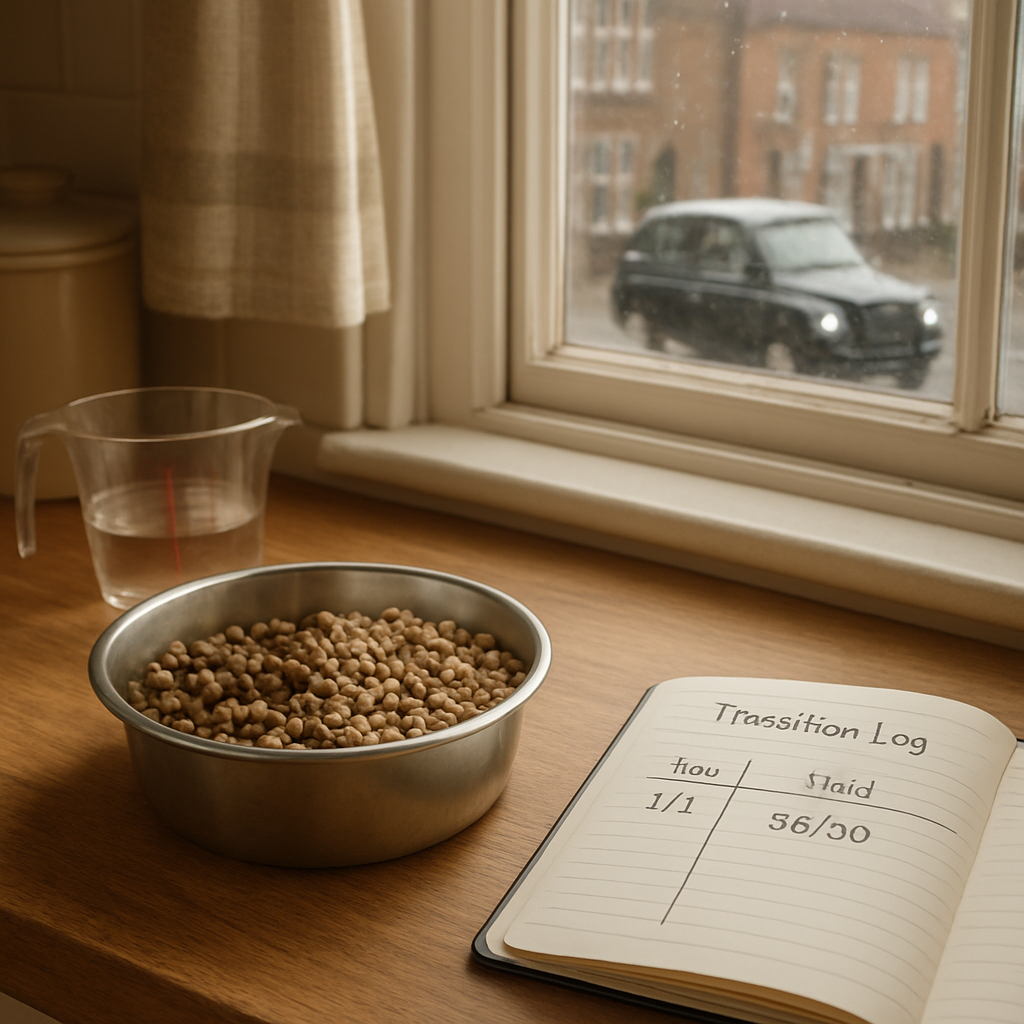
Step 1 – Map out a 7‑day mixing schedule
Start with a simple ratio: 75 % old food, 25 % new food for the first two days. Then flip to 50/50 for days 3‑4, 75 % new for days 5‑6, and finally 100 % new on day 7. This gradual approach gives the gut microbiome a chance to adapt without a shock.
Why does this work? A study referenced by Natural Dog Food Company’s 7‑day transition plan shows that most dogs settle within a week, with fewer than 5 % experiencing prolonged digestive upset.
Step 2 – Watch the signs and pause if needed
During the mix‑up, keep an eye on three things: appetite, stool consistency and energy levels. A slight change in colour or a bit of extra flatulence is fine – but if the stool becomes watery for more than 48 hours, or your dog refuses to eat, rewind a step. Stay at that ratio an extra two or three days before moving forward.
Imagine you’re switching Bella to a salmon‑based hypoallergenic formula. On day 3 she’s a bit sluggish and her poop is softer than usual. You’d drop back to 25 % new food for a couple of days, then try 50 % again. That tiny adjustment can be the difference between a successful switch and a repeat of the old itching.
Step 3 – Keep treats and supplements on hold
All treats, bones, and even the occasional table scrap should be put on pause. Even a tiny bite of wheat‑based biscuit can re‑introduce the allergen you’re trying to eliminate. If you need a reward, use a small spoonful of the new hypoallergenic kibble – it reinforces the new flavour without adding hidden proteins.
One owner in Leeds told us they kept a handful of low‑calorie, pea‑free dental chews that matched the new food’s ingredient list. The chews didn’t interfere, and the dog actually enjoyed the consistency change.
Step 4 – Track progress with a simple log
Jot down the date, the mixing ratio, any noticeable changes in coat shine, itchiness or bathroom habits. A one‑column spreadsheet works wonders. After day 7, review the log: if symptoms have subsided, you’ve likely found a winning hypoallergenic dog food uk. If not, the log will point you to the day the problem re‑appeared, guiding the next tweak.
For a quick visual guide on how to structure your log, check out the feeding‑time advice from The Natural Dog Hub. Their timing tips pair nicely with a transition plan – feed the same amount at the same times each day to keep the gut rhythm steady.
Step 5 – When the trial ends, consider a re‑challenge
Once you’ve hit day 7 with no flare‑ups, keep the new diet for at least another two weeks. Then, if you want to confirm the culprit, re‑introduce the old ingredient in a controlled way (say, a spoonful of the previous kibble for three days). If symptoms return, you have a clear answer.
Platforms like UK Pet Food Intolerance make the re‑challenge data easier to interpret – the test results you already have can be cross‑checked with the re‑introduction log to pinpoint the exact protein or carb causing trouble.
Remember, patience is the secret sauce. A calm transition not only protects your dog’s gut but also builds confidence that you’re making the right dietary choice.
Common Myths About Hypoallergenic Dog Food
Ever walked past a bag that proudly screams “hypoallergenic” and thought, “That must be the magic bullet for my dog’s itch?” You’re not alone. The label has become a shortcut for many owners, but the reality is a lot messier than the marketing suggests.
Myth 1: “All hypoallergenic foods are created equal”
In truth, “hypoallergenic” is a marketing term, not a regulated standard. One brand might simply swap out chicken for duck, while another actually hydrolyses the protein so the immune system can’t recognise it. The Scrumbles blog points out that without a certifying body, any product can slap the label on its packaging as long as it avoids a few common allergens – but that doesn’t guarantee it’s suitable for your pup’s specific trigger.
Myth 2: “If the food says hypoallergenic, my dog can eat it without a test”
Most dogs react to a single protein, yet the word “hypoallergenic” can hide other culprits like soy, corn or hidden dairy. A recent review of UK pet owners shows that only about 1 % of chronic itching is truly food‑related – the rest is often environmental. Jumping straight into a “hypoallergenic” bag without first confirming which ingredient is the problem is like buying a lock without knowing which door you need to secure.
What we’ve seen work best is a quick at‑home intolerance test from UK Pet Food Intolerance. The kit gives you a shortlist of proteins to avoid, so you can match the result to a truly suitable formula rather than guessing.
Myth 3: “Grain‑free equals hypoallergenic”
Grain‑free trends grew because many owners assumed grains were the main irritant. The data from the My Ollie myth‑busting article shows that gluten intolerance in dogs is rare, and grains can actually provide valuable fibre. A “hypoallergenic” diet that’s also grain‑free might still contain peas, lentils or other legumes that act as hidden protein sources.
When you scan the ingredient list, look for a single, novel carbohydrate – sweet potato, pumpkin or rice – and avoid anything that hints at “pea starch” or “lentil flour” unless you’ve already ruled those out.
Myth 4: “My dog will love any hypoallergenic recipe”
Flavor matters, especially when you’re asking a dog to give up its favourite chicken kibble. Some hypoallergenic formulas use hydrolysed proteins that taste bland, leading to a temporary drop in appetite. One real‑world example: Lucy, a Border Collie from Newcastle, refused to finish her first week on a hydrolysed diet until her owner mixed in a spoonful of low‑calorie, hypoallergenic treats that matched the same ingredient list. The trick is to keep treats within the same “allergen‑free” family, not to re‑introduce the offending protein.
Myth 5: “A short trial is enough to know if it works”
Vets generally recommend a 12‑week exclusion trial because skin and gut symptoms can lag behind dietary changes. Cutting the trial short can give a false negative – your dog might still be reacting, but the signs haven’t peaked yet. Keep a simple log: day, mix ratio, stool consistency, itching level. If after eight weeks the symptoms haven’t improved, you either need a different protein source or a deeper look at environmental factors.
Practical steps to cut through the myths
- Check the label for a single novel protein (duck, venison, salmon, insect‑meal).
- Confirm the carbohydrate is alone – sweet potato, pumpkin or rice.
- Look for “hydrolysed” if you need an ultra‑low‑allergen option.
- Use an at‑home intolerance test to pinpoint the exact protein to avoid.
- Commit to a 12‑week trial, logging every bite and reaction.
- If symptoms persist, revisit the log to spot hidden triggers like treats or supplements.
Remember, “hypoallergenic dog food uk” is a useful search phrase, but it’s a starting point, not a guarantee. By debunking these myths and following a data‑driven plan, you’ll stop the endless cycle of swapping bags and finally give your dog the relief they deserve.
Conclusion
If you’ve made it this far, you’ve probably felt that mix of relief and lingering doubt – “Will this really fix Bella’s itching?”
The short answer: a systematic, 12‑week trial of the right hypoallergenic dog food uk, backed by solid data, usually does the trick. You’ve already seen why single‑source proteins, clean carbs and minimal additives matter.
What’s the next practical step? Grab an at‑home intolerance test, log every bite, and stick to the mixing schedule we outlined. When the log shows calmer skin and steadier stools, you’ve found the winner.
And if the symptoms linger? Re‑visit the log, swap the protein, or check for hidden treats. Remember, the process is iterative – it’s okay to tweak.
In our experience, owners who combine a clear test result with a focused hypoallergenic dog food uk report noticeable improvement within three weeks, and full relief by the end of the trial.
Finally, keep the new diet for at least another two weeks before you consider any re‑challenge. This buffer lets the gut fully settle and gives you confidence that the improvement isn’t just a temporary blip.
So, take a breath, trust the data, and give your dog the consistent, low‑allergen diet it deserves. Your calm‑coated companion is just a few thoughtful steps away.
FAQ
What exactly is hypoallergenic dog food uk and how is it different from the kibble I buy now?
In plain English, hypoallergenic dog food uk is formulated with a single, novel protein and a simple carb so there’s almost nothing your dog’s immune system can mistake for a threat. Regular kibble often packs multiple meat meals, grains and hidden additives – think chicken, beef, soy, wheat – all of which can trigger itching or gut upset in sensitive pups. By stripping the ingredient list down to the basics, you give the gut a chance to calm down and the skin a break from constant irritation.
How long should I run a hypoallergenic trial before I can tell if it works?
Vets usually recommend a 12‑week exclusion trial because skin and digestive symptoms can lag behind diet changes. You’ll start to see a drop in itching within the first three weeks, but aim for the full twelve to be sure the gut has fully reset. Keep a simple log – date, bowl ratio, stool colour, itch level – and look for a steady trend rather than a single good day.
Do I need to do an at‑home food intolerance test before I switch foods?
It’s not mandatory, but it saves you a lot of guesswork. A test from UK Pet Food Intolerance can pinpoint the exact protein your dog reacts to, meaning you can choose a hypoallergenic formula that avoids that trigger straight away. Without a test you might end up swapping to a new novel protein only to discover another hidden allergen later, prolonging the cycle of trial‑and‑error.
Can I still give my dog treats while we’re on a hypoallergenic diet?
Only if the treats share the same allergen‑free profile as the main food – same novel protein, same single carb, no hidden wheat or soy. A handful of low‑calorie dental chews that list duck and sweet potato as the only ingredients are fine. Anything with a different meat source or grain could re‑introduce the culprit and undo the progress you’ve made, so keep treats simple and consistent.
What’s the safest way to transition my dog onto a new hypoallergenic food?
Start with a 75 % old / 25 % new mix for two days, then 50 % each for the next two, 75 % new for another two, and finally 100 % new on day seven. Watch appetite, stool consistency and energy levels – if anything looks off, pause at the current ratio a few extra days before moving on. A gradual switch gives the gut microbiome time to adapt without triggering a flare‑up.
My dog’s still scratching after the 12‑week trial – what now?
First, double‑check the log for any sneaky sources – treats, supplements or even a hidden pea‑starch in a chew. If everything truly matches the hypoallergenic formula, consider a re‑challenge: re‑introduce the previous protein in a controlled way for three days and watch for a reaction. Persistent itch might signal a secondary issue like environmental allergens or a skin infection, so a quick vet check‑up is the next sensible step.


Leave a Reply
Want to join the discussion?Feel free to contribute!